West Trestle Review
  • Home
  • Current Issue
  • Past Issues
    • September 2025
    • March 2025
    • September 2024
    • May 2024
    • January 2024
    • November 2023
    • September 2023
    • May 2023
    • March 2023
    • January 2023
    • November 2022
    • September 2022
    • July 2022
    • May 2022
    • March 2022
    • January 2022
    • November 2021
    • September 2021
    • July 2021
    • May 2021
    • March 2021
    • January 2021
    • November 2020
    • September 2020
    • July 2020
  • Cross-Ties
  • About
    • Arrivals & Departures
    • Masthead
    • Submit
  • Archive
    • An-hwei Lee, Karen
    • Barksdale, Jessica
    • Beal, Jane
    • Burch, Beverly
    • Case, Katherine
    • Clemmons, Melinda
    • Finn, Anna
    • Gunton, Kathleen
    • Gutowsky, Connie
    • Kralowec, Kimberly
    • Kronenfeld, Judy
    • Laskar, Devi
    • Leahy, Anna
    • Lee, Priscilla
    • Levine, Julia B.
    • Lipshin, Irene
    • Mohamadi, Sheida
    • Robinson, Amy Elizabeth
    • Rudd Entrekin, Gail
    • Shea, Cathryn
    • Terris, Susan
    • Topal, Carine
    • Wegener, Gillian
    • Williams, Wendy
  • Home
  • Current Issue
  • Past Issues
    • September 2025
    • March 2025
    • September 2024
    • May 2024
    • January 2024
    • November 2023
    • September 2023
    • May 2023
    • March 2023
    • January 2023
    • November 2022
    • September 2022
    • July 2022
    • May 2022
    • March 2022
    • January 2022
    • November 2021
    • September 2021
    • July 2021
    • May 2021
    • March 2021
    • January 2021
    • November 2020
    • September 2020
    • July 2020
  • Cross-Ties
  • About
    • Arrivals & Departures
    • Masthead
    • Submit
  • Archive
    • An-hwei Lee, Karen
    • Barksdale, Jessica
    • Beal, Jane
    • Burch, Beverly
    • Case, Katherine
    • Clemmons, Melinda
    • Finn, Anna
    • Gunton, Kathleen
    • Gutowsky, Connie
    • Kralowec, Kimberly
    • Kronenfeld, Judy
    • Laskar, Devi
    • Leahy, Anna
    • Lee, Priscilla
    • Levine, Julia B.
    • Lipshin, Irene
    • Mohamadi, Sheida
    • Robinson, Amy Elizabeth
    • Rudd Entrekin, Gail
    • Shea, Cathryn
    • Terris, Susan
    • Topal, Carine
    • Wegener, Gillian
    • Williams, Wendy
Search by typing & pressing enter

YOUR CART

Cross-Ties

12/15/2023 0 Comments

Nadia Arioli :: Julia Caroline Knowlton

Picture
When I was a lot younger, I remember so consciously looking for women poets, American women poets, who did not destroy themselves with drugs and alcohol and/or, die by suicide. So, for me, one of the many things that your collection does, is not only honor the work for Kay Sage, but you’re just right there, you know? Just doing what was so difficult for women to do for so long.

​                     — 
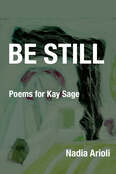
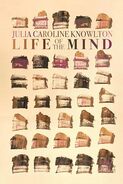
Poets Julia Caroline Knowlton and Nadia Arioli in conversation about their latest books Life of the Mind and Be Still: Poems for Kay Sage both published by Kelsay Books, 2023.


Picture
​Julia Caroline Knowlton: I was glad to hear you were interested in a dialogue. I see you as this young and hip and edgy poet.
Nadia Arioli: I mean, you study fashion in Paris. I’m in a sweatshirt covered in cat hair and baby food so….
​
JCK: I still remember. I think as I mentioned my daughters are now 28 and 25, but I still remember that phase ... I was just reading through your book again. I read about the life and work of Kay Sage. She’s just amazing and has some interesting intersections with France and Italy.
NA: Yeah, yeah, for sure. She had an interesting and sad life.
JCK: You know, when I was reading a brief biography, I was thinking, God, I hope she doesn’t die by suicide. But she did
NA: But she sure did.
JCK: A fatal bullet through the heart. I know this is a very obvious question, but how did you come to write an entire book about Kay Sage?
NA: It got a little out of hand. *Laughs* I just wanted to write the one poem! Okay, so, I remembered seeing her painting in a museum as a kid. And I was like, I’m going to remember the name Kay Sage. And then I promptly forgot it. And then I randomly was like who was that? Strong name, who was she? And then I Googled it and was like ah, hah! Then I thought, what if I write more than one poem? And then it just sort of expanded.
JCK: Yeah!
NA: By luck, the defining catalogue came out in 2018 [Catalogue Raisonne by Stephen Robeson Miller, a collection of Sage's art, including biographic material]. Which was when I was in the thick of it, so it kind of worked out.
JCK: Wow. Really great. And one of the many things I admire is the amount that you write, especially given that you combine time with being an editor and have a young child. I mean, this is a substantial book.
NA: Yeah, it’s thick. Thank you. I use a planner for everything. Well, let’s talk about your book. You have a painterly focus too, I think not as ekphrasis, but you know, you talk about Rodin. And you of course, paint, and second one is Life of the Mind, so I don’t know if you want to talk about painting, in your book.
JCK: Well, in this slender chapbook, I talk about basically the breakdown of one relationship, which was my marriage, and the emergence of new relationships to myself through travel and art. It’s the only time I’ve published or talked about my divorce in my poems. One of the things I wrote about is starting to paint. I’m still really new. And I did the cover art. This is my own art. This is my third chapbook. I end up talking about individual art. So this is a cool overlap.
NA: We both actually wrote about Ginkgo trees, so that’s cool.
JCK: Yeah!
NA: So we were both like yeah, those trees are cool. Let’s write about that. 
JCK: Let’s see what else. I guess it’s pretty overt, I talk about the aging process. I’m in my late fifties now. It is of course an inexhaustible topic for poets. I'm glad it seems like now there’s space in American Poetry to talk about aging. When I was young and a student, I mean for a long time, I never saw any poems by middle-aged women talking about what it’s like to get older. I mean, I can’t think of a single one. But then so, you know, I was astounded when I started this book, and one of my many thoughts on this was wow, Nadia’s doing what Anne Sexton and Sylvia Plath were doing. I mean, of course, you take language further than that. But I was always so struck by, when I studied their work when they had young children at home, and trying to balance all that shit, writing, and having young children, as we know, didn’t turn out so great for either of them.
NA: Oh, did Anne Sexton die by suicide too?
JCK: She did, yeah.
NA: I didn’t know that. 
JCK: Put on her mother’s fur coat, and got drunk, and went out to the car, very dramatically did the … When I was a lot younger, I remember so consciously looking for women poets, American women poets, who did not destroy themselves with drugs and alcohol and/or, die by suicide. So, for me, one of the many things that your collection does, is not only honor the work for Kay Sage, but you’re just right there, you know? Just doing what was so difficult for women to do for so long.
NA: Well, thank you. Speaking of like periods and stuff, my favorite poem in your collection was "My Period at Fifty." I just, really love it, the images, and how like stark it is. I think I wrote a question on that one. What makes you want to write about something that is considered taboo? I mean, it shouldn’t be considered taboo, but like…
JCK: Right. 
NA: HOW COULD YOU!
JCK: It felt really good to write that. Again, not the most common topic for poems. And this little poem went through quite a lot of drafts. I workshopped it when I did my MFA, whittled it down to its current state. I remember you very kindly accepted it for Thimble, and then, I literally got two acceptances the same day. 
NA: That happens! And Rust and Moth is wonderful, and we ended up taking the other one, so it worked out. I just really like that.
JCK: Tell me about how your work as an editor dovetails. Tell me how and when did you start Thimble.
NA: That was six years ago. So 2018. I actually co-founded it with someone who dropped out. He did a lot of the like startup work: Here’s the format, here’s what we’re doing. And I was like okay! I was just hoping and seeing where it goes. It’s definitely an adjacent hat [to writing] but not the same hat. It’s one of those things that’s like oh, I have poems [that I read for Thimble] I really, really like. So I want to write poems that I would enjoy reading.
JCK: Right, I have a file on my computer called “Poems I love.” And I keep track of them. And I have started teaching poetry in the school where I teach French so I can pull them out. But I think it would be really exciting to do what you do. But I doubt that I would ever edit a literary journal, because it’s such a labor of love, right?
NA: Right. I do have great help! I have readers, you know, who read as well, and I most definitely couldn’t do it without them.
JCK: Tell me more about your book. Was it a very organized process of looking at the paintings and organizing the poems, or was it kind of hopscotch?
NA: Well, it started off kind of hopscotch because I could only find, let’s just say, forty of her paintings online, so I wrote the poems for those. And then once [Miller’s] big book came out, I went through methodically. First I looked through the paintings and just sticky-noted the paintings that spoke to me or were historically important. And I went in order.
JCK: Okay, cool. So, one of my favorites in your book is on page forty: "Near the Four Courners." I am really astounded by the power of this poem. Did you write it quickly?
NA: It was an early one, actually. This is the first one I think got published by Gasher. I think I did.
JCK: Are you pretty happy with it? Because it’s amazing!
NA: Oh, thank you. I just feel like there’s not enough poems about women orgasming, so it’s about time.
JCK: Yeah!
NA: I guess, yeah, I’m happy with that one.
JCK: The enjambment. Was that very deliberately? 
NA: I think so! I can’t say what exactly I was consciously doing, but I wanted like a halting, awkwardness to it.
JCK: It’s just extraordinary.
NA: Thank you. For your book—it doesn’t really segue from that, sorry—but for your book, I noticed you definitely have a style, right. You have shorter poems. You tend to write in the present tense. And they tend to be like little, tight poems. So what drew you to tight, little rooms?
JCK: That’s a good question. I have had poetry teachers challenge me to write poems that are longer, poems that take up more than one page. Well, I love couplets. I often write in couplets. I’m really intrigued by relationships. I’m certainly no expert at relationships. But whether it’s mother and child, or romantic partners, I love to play around with couplets while I’m thinking about relationships between two people. I’d like to do it not quite as much. I mean, we all have our obsessions, right? But, you know, the possibly more philosophical idea behind it is by definition poetry is not prose. So I like to just take it down to its bare essence. Again, I would like to try to put more fur than just bare bones poems. I always admire people, I mean, I would have a hard time writing more than a hundred pages. It’s really great. Do you have any special time of day that you write? Or is it kind of catch-as-catch-can
NA: That’s a good question, because if I try to be organized relative to a time of day, it stresses me out, because if I miss the window, I’m like “It’s off, the whole thing is off. I blew it!” But then I was like, why am I stressing myself out over imaginary deadlines? What am I doing? But if I do set a goal of writing something every day, it tends to go better. Or like for the Kay Sage book, I tended to look at it in weekly chunks. Like, just write one poem, or two poems a week, which is doable, right? Like, spend a day brainstorming, let’s say a day writing, and a day editing. Do you write the same time of day?
JCK: Well, I have settled into the early morning, before I go teach, and before, you know, the day starts fluttering about me with all the things the day brings. So I do have this sacred early morning time. But I am more of a fits and starts. Well, a few weeks ago, I wrote A-Z Poems for Babies.
NA: Oh fun!
JCK: I’ll see where that goes. I think it’ll just be terrific to write poems for babies learning the alphabet. So I did that. That came out in one fell swoop. Lately I’ve just been fiddling around with painting and not writing ... I always seem to keep things going. But kind of like you described, I try not to put too much pressure on myself. At the same time, I do need enough of that. Sort of like a pilot light on a stove. I need enough of that to keep me going.
NA: Yeah, so like, a loose structure. Like a big project. Right now, I find myself without a project. So I was like well, what am I … what do I got next? 
JCK: I completely relate to that feeling, and it causes anxiety. Like, oh what now? I was reading about Louise Glück. Evidently, she would go through periods of two years, nothing. 
NA: Wow.
JCK: She would understandably get pretty freaked out. But then more poetry would appear. So tell me about your visual art, because that’s something else we have in common.
NA: I do various things. I go through various projects. I never got the hang of painting. I can’t get the paint to do the thing. Do you do oil painting?
JCK: No, I’m doing acrylic.
NA: Oh okay. Yeah I did the cover for Kay Sage. I wanted to do like an homage to Sage, not like a gross copy—because that would kind of invite criticism. Like, this is what this poem thinks Kay Sage is? Wow. Imagine what she did in her poems! So I did that with oil pastel, and then I actually photoshopped it and inversed the colors to get that green.
JCK: Wow, looks good.
NA: Thank you. I would say I’m more of a magpie when it comes to art because, I think I’m good, but it’s not so tied to my identity. Like, if someone said, “You’re not a real poet,” I would clobber them and cry. I would be so upset. Whereas if someone said, “You’re not a real artist,” I would be sad because they’re being very rude, but it wouldn’t be like my identity is at stake. So it’s kind of freeing. I can kind of do what I feel like.
JCK: I do feel that with painting as well. I mean, I don’t have a degree [in painting]. I’ve just been admiring painting for years, and it’s fun to explore. Well, this is another thing we have in common. We both did the visual art! 
NA: And also we have the same publisher! I guess we could have started there: Kelsay Books. 
JCK: As one person would say, we’re litter-mates.
NA: Oh, that’s funny. I liked working with them. They were like very commutative. They were on top of it. I’ve had some publishers—I’m not going to say who—where it was like, um, omigod. 
JCK: Did you have two books at the same time?
NA: I had a book picked up last week, but it’s not coming out until 2025, which is a relief. I have a chapbook allegedly coming out later this year. I haven’t really heard from them. I need to follow up.
JCK: I did see on Facebook that you signed the contract. Congrats! What book was that?
NA: Thank you! It’s called Mother Fur. One part’s is about being a mom, one part is about Grendel’s Mother, and the third part is an essay. I sent it to, well, I don’t want to speak too soon, because I haven’t actually published a book with them yet, but I really like Fernwood Press so far. They’ve been wonderful. That’s why I’m without a project. What’s next for you?
JCK: Kelsay Books does accept proposals for children’s books, so I’m going to work on my Poems for Babies—A-Z, one poem for each letter of the alphabet, which was an easy way for me to structure the manuscript. And I’m hoping they might like to publish it. It would be really exciting to think of my audience of being babies in the midst of language acquisition. I would just delight. I am trying to take a pause for more mature, adult poems, if you will. I’m going to work on painting for a while. I’ve sold a few paintings, so I’m kind of interested to see where I might go with that. I am writing individual poems again. Thank you very much—you’re going to publish [with Thimble] my Proust poem. I’m very grateful. As long as I have like a slow dribble, and then I don’t panic too much. 
NA: I have some more questions. For putting a book together, did you sit down and be like, okay, I’m going to write a book, or were you like what poems kind of go together? Or kind of both?
JCK: Very much the second. I just write poems and then start grouping them together. I know there’s been this trend for a long time in American poetry to write the overall, thematically connected book, like a collection of poetry that tells the story of a murder. There’s a historical basis to it. I don’t do that quite as closely. But I know the importance of having a book go together. Kind of like having the ingredients in the kitchen; it all has to go together. I just have it come about as naturally as possible. How about you, for the same question? 
NA: Kind of between. I’ll write some poems, and be like I’ve noticed I’m on a kick about writing about motherhood. Or Grendel’s Mother. That was pretty easy—Grendel’s Mother is a joy to write about! What else has she been doing? I find it easier to have a loose structure. Most of books have themes, but one chapbook, like a four-way split of a book, I didn’t have a theme. I was like, I’ll just find 30 pages of poems I have. That was so tricky. What order? And what poems? Does it make sense?
JCK: It makes me think of cleaning out a closet. Like, ah, lot of stuff happening. I wanted to ask you, at what age did you know you wanted to write, needed write, etc.?
NA: I guess at age 10. I was really little. I read this book—I had to look it up, it was by Jean Little, about kids who wrote poetry, and I thought I bet I could do that. And then I kept doing it. I had some good encouraging teachers. How about you?
JCK: I also was about 10 when I wrote my first poems. I was in high school when it started to become more of a deeper necessity. And like you, I had teachers who told me, you’ve got something going, keep at it.  Especially because I had to teach full-time, it’s so meaningful to think of those teachers who encouraged me. It sounds really sentimental, but it’s true.
NA: I found a poem I wrote in college. It was like in a little Poetry Club publication or whatever. And I dug it out, and I read it, and I was like, well, thank god those teachers saw potential in me, because OOOF. Woof. 
JCK: Listen, you’re going places for sure.
NA: Well, thank you. I mean, this year I had a good opportunity—because I don’t work outside the home. So it’s not like I’m not working because it’s a full time job, but I don’t have this third other thing. Like, I’m not trying to keep my baby, my poetry, and my job. I’m just trying to take care of my poetry and my kid. I will go back to work once he’s in school, so I’m trying to make the most of this time but not, you know, burn myself out.
JCK: Well, I watched your narrative on Facebook of moving up to New England. It’s cool.
NA: Thanks, glad I’m not working in an office anymore.
JCK: I would have a hard time. In fact, I did have a hard time. When I was out of college, I worked in an office for a couple of years. I didn’t want to keep doing that, so I went back to grad school to teach college level French, and that’s been the bread and butter. That’s working out.
NA: Yeah
JCK: Anyways, this has been great.
NA: This has been good. WE DID IT!
JCK: Yay, perfect. 


Picture
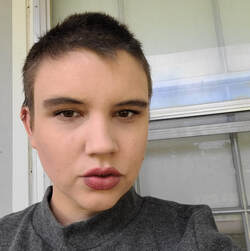
Nadia Arioli is the co-founder and editor-in-chief of Thimble Literary Magazine and a multi-disciplinary artist. Arioli’s poetry has been nominated for Best of the Net three times and can be found in Cider Press Review, Rust + Moth, San Pedro Review, McNeese Review, Whale Road Review, West Trestle Review, As It Ought To Be, Voicemail Poems, Bombay Literary Magazine, and other publications. Essays have been nominated for Best of the Net and the Pushcart and can be found in Hunger Mountain, Heavy Feather Review, Angel Rust, and elsewhere. Collages and scribblings have been featured as the cover of Permafrost, as artist of the month for Kissing Dynamite and Rogue Agent, and in Poetry Northwest.


Picture
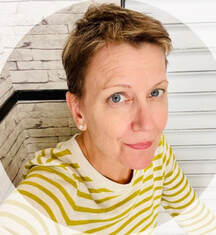
Julia Caroline Knowlton is the Adeline A. Loridans Professor of French at Agnes Scott College in Atlanta, where she also teaches creative writing. Recognition for her poetry includes a Georgia Author of the Year award (2018) and an Academy of American Poets College prize. She was a finalist for a GA Author of the Year award in 2022. Kelsay Books has just released her third poetry chapbook, Life of the Mind.

0 Comments


Leave a Reply.

    RSS Feed

    Tweets by westtrestle
  
Powered by Women